Most Managua addresses have no street name or number. Here is how the landmark system works, and the words you need to follow it.
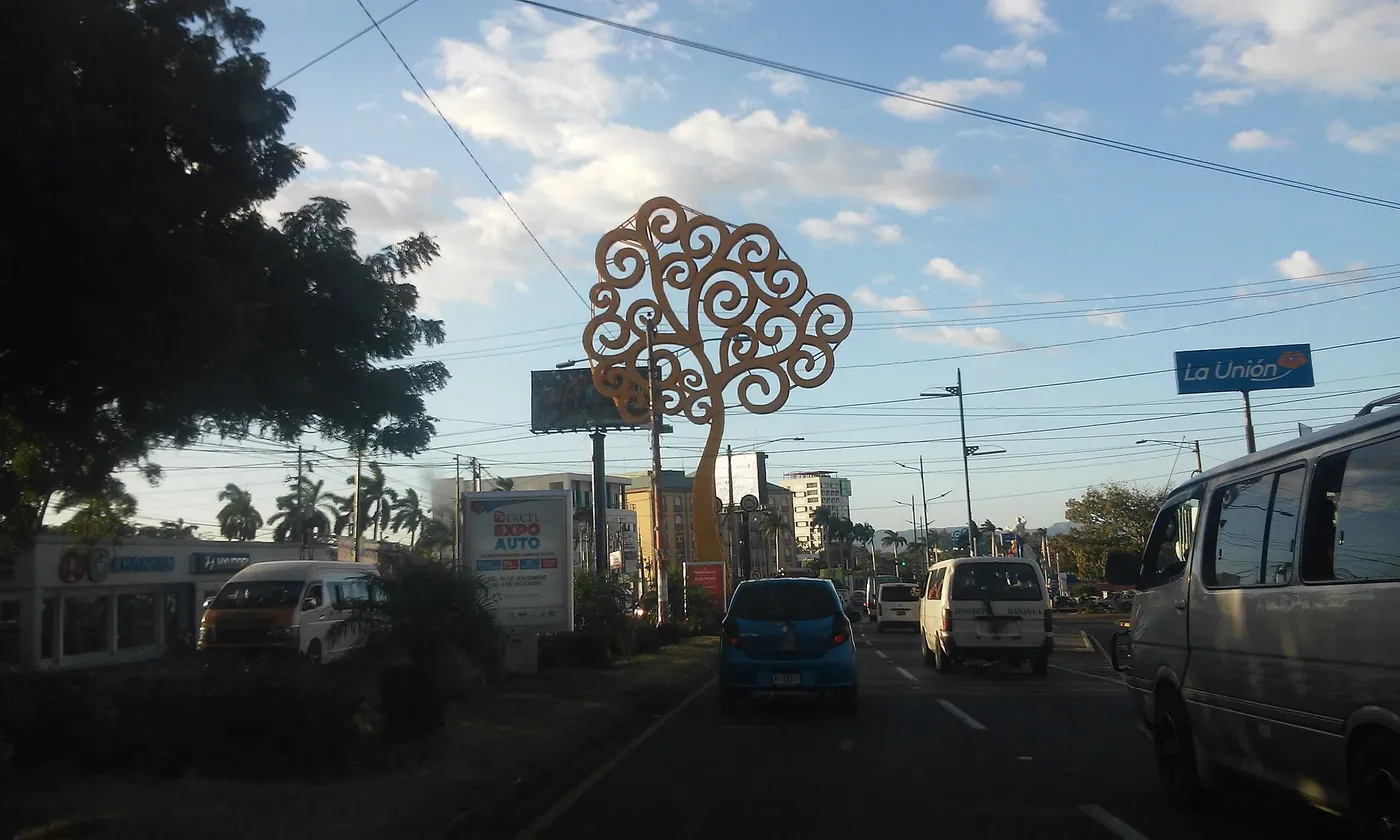
Directions from a landmark
Ask for an address in Managua and you will probably receive a small story: start at a known landmark, then go so many blocks in a given direction. A typical address might read like "from the petrol station, two blocks toward the lake, half a block up". Street names exist on some maps but are rarely used. The system grew up over decades, and it was reinforced after the 1972 earthquake erased much of the old street grid.
The landmark
The starting point can be anything well known: a church, a rotonda, a shopping centre, a school, a petrol station, a tree. Famously, some landmarks no longer exist, and directions may begin "from where the old cinema used to be" (de donde fue...). Locals know these ghost landmarks, and taxi drivers will too.
The directions
Directions use the sun and the lake rather than north and south:
- Arriba (up) means east, toward the sunrise.
- Abajo (down) means west, toward the sunset.
- Al lago (to the lake) means north, toward Lake Managua.
- Al sur or a la montaña means south, toward the hills.
The distance
Distances are counted in cuadras, city blocks, often with "media cuadra" for half a block. In older or rural directions you may also hear varas, a traditional measure of a little less than a metre. "Cien varas" is used loosely to mean about a block.
Making it work
Always ask for the starting landmark and the name of a nearby well-known place, and save the address in writing so that you can show it to a taxi driver. Check the position on a digital map before you travel; map pins are much easier than verbal directions for first-time visitors. When in doubt, drivers will ask passers-by, which is entirely normal. See getting around Managua for transport options, and Spanish for visitors for useful phrases.